




Geothermal as a Utility-Scale Electricity Resource
The Utah Clean Energy experts are genuinely excited about what’s happening in geothermal right now. A new wave of technology is rapidly expanding what’s possible, where it can be built, and how much clean, reliable energy it can deliver. That’s why we’re launching a series dedicated to geothermal: to walk you through the fundamentals, the innovative breakthroughs, and the real‑world projects that have us so jazzed about geothermal’s future. From how it works to why Utah is leading the way, we’ll break down the details and show why next‑generation geothermal could be a game‑changer for the energy system.
Next Generation Geothermal, A Primer, Part 1: Geothermal as a Utility-scale Electricity Resource
Geothermal can mean a few different things, so let’s start by distilling it down. We’re talking about heat from the earth. The geothermal you’ve likely already heard of (we have several geothermal plants that have been running for decades here in Utah) rely on super-heated water from ultra-deep reservoirs in the earth’s crust that, when brought to the surface, spins a turbine to generate electricity. This is a clean, fuel-free, reliable source of electricity. What’s not to love?
The only catch is that these geothermal power plants are dependent upon finding the perfect mix of three ingredients: heat, water and a fault system where the water can flow through the rock to harvest the heat. Those three ingredients in the same spot are few and far between. Because of this, geothermal power plants in the United States generate only about 4 GW of electricity, which is about 0.4% of U.S. generation. Click here to take the deep dive to understand how a Traditional Geothermal Power Plant works.
Innovation Unlocks Geothermal Potential
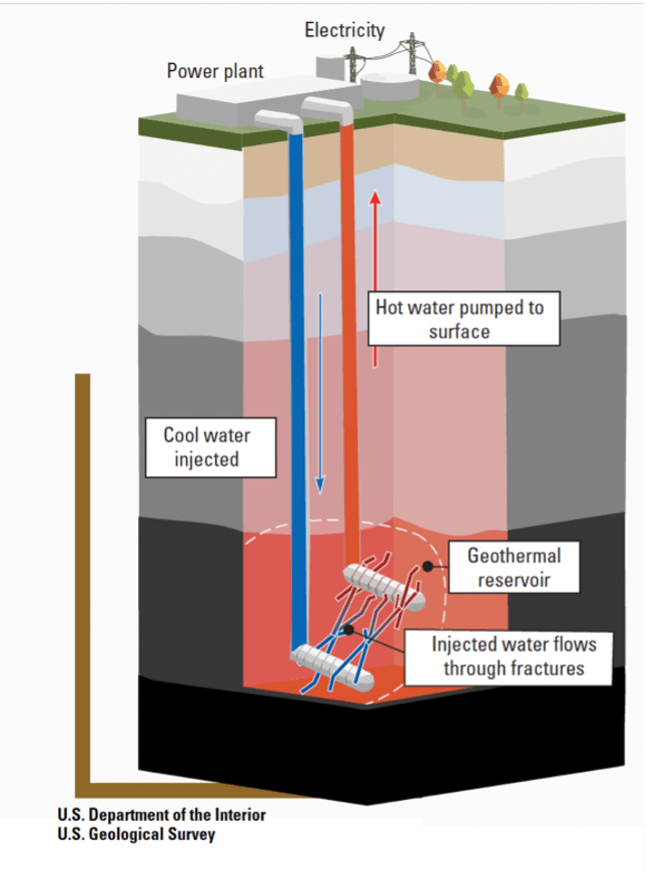
Known officially as “Enhanced Geothermal Systems” (EGS), recent technological advancements are enabling a new generation of geothermal energy. EGS leverages advances in natural gas drilling techniques to fracture rock where water can flow, heat up, and be used for electricity generation. This will enable EGS to be developed in far more locations than traditional geothermal resources, enabling much more geothermal heat to be harnessed for electricity. Click here for a deep dive into EGS technology.
And it’s no surprise that Utah is at the forefront of next‑generation geothermal research and development. The state sits within the geothermal‑rich Great Basin region and is home to the U.S. Department of Energy-sponsored Utah FORGE (Frontier Observatory for Research in Geothermal Energy) project, a world-leading hub for advancing EGS innovation.
Exploration Advances: Geothermal Exploration and AI
Even as next-generation geothermal expands what is possible, location still matters. Enter yet another innovation: AI powered site exploration.
Combining traditional field exploration with machine learning is enabling companies to more quickly identify productive geothermal resources – both for traditional geothermal power plants and for EGS. Zanskar, a Salt Lake City-based geothermal exploration and development company, is at the forefront of this technology. They are uncovering new locations for next-gen and traditional geothermal, expanding the productivity of existing geothermal resources, and potentially unlocking opportunities to pair next-generation projects with adjacent existing geothermal resources to maximize impact.
What does the U.S. Geothermal Resource Look Like?
The National Lab of the Rockies (NLR) recently published a map of “Development Suitability of Enhanced Geothermal Systems (EGS). This map indicates EGS suitability across the continental U.S. The darker the red, the higher the potential for EGS.
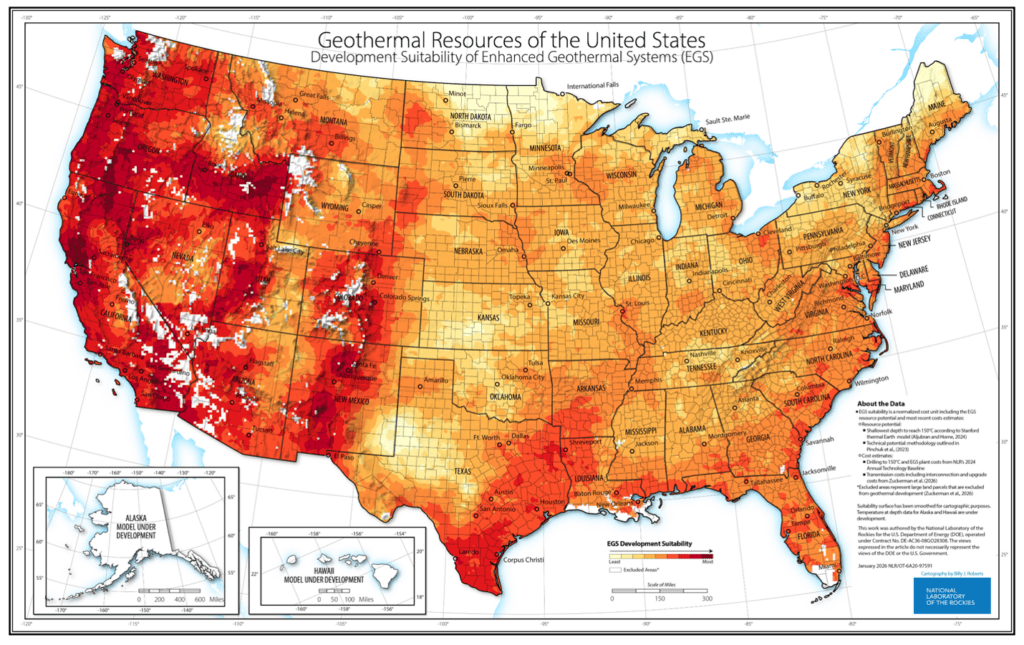
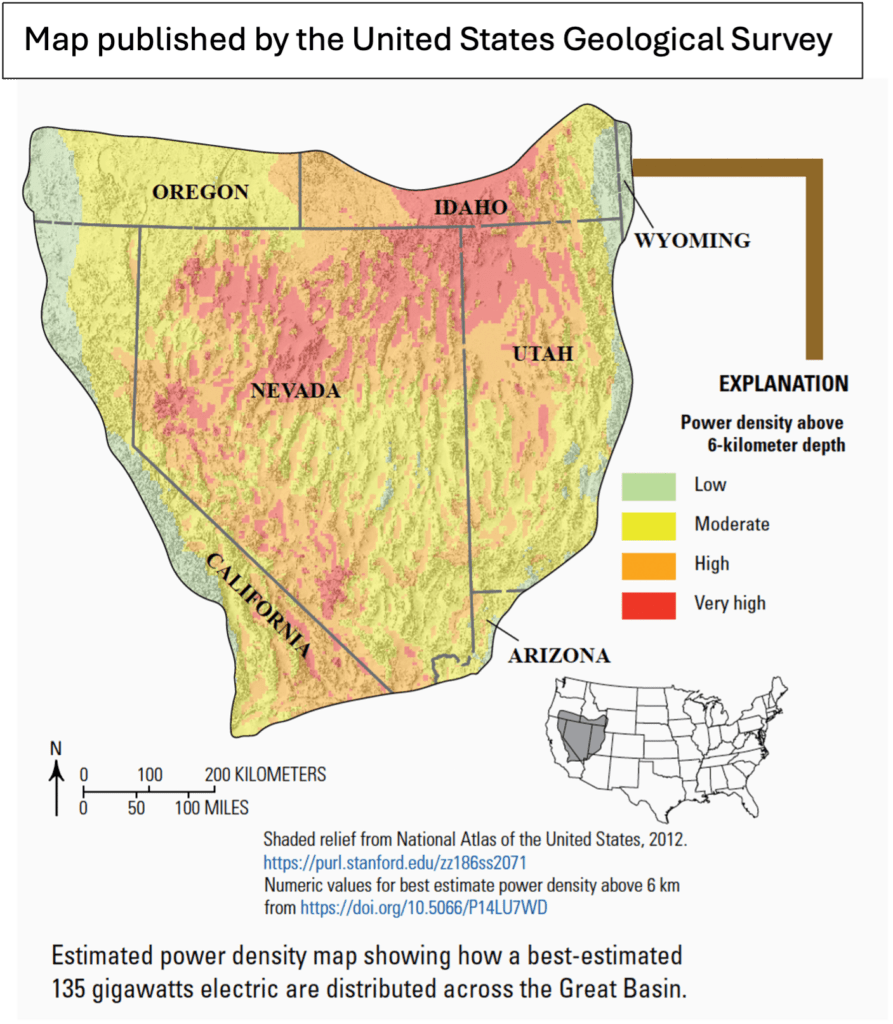
This map makes one thing clear: while next-generation geothermal potential extends across most of the country, Utah and the whole western United States are the hotbed of geothermal potential. A closer look (see image below) of the Great Basin highlights just how significant the potential is. According to the U.S. Geological Survey, the upper 3-4 miles of the Earth’s crust in the Great Basin alone could provide 135 gigawatts of electricity. That’s roughly 10% of today’s total U.S. power production capacity. A 2025 Princeton study projects that next-gen geothermal could provide up to 20% of U.S. electricity generation by 2050 if technology costs continue to fall in step with other technological advancements.
What to Watch for in Utah?
Utah FORGE has become a national hub for next-generation geothermal research, innovation, and development. This has enabled private companies to build off FORGE’s advances. Fervo Energy is at the cutting edge of operationalizing next-generation geothermal right here in Utah. By October 2026, their Cape Station project will bring 100 MW of enhanced geothermal online in Beaver County, with another 400 MW scheduled to come online in 2028. This is just the tip of the iceberg as transmission infrastructure and other barriers are overcome.
What’s Next?
Geothermal and next-generation geothermal offer 24/7, pollution free, scalable and abundant power for all of us. The next section of our Geothermal Primer will look in more detail at how geothermal can be used at non-utility scales as a distributed heat source.



 We would like to clarify that Utah Clean Energy is not a solar company. We are a nonprofit organization that advocates for solar and other clean energy technologies, but we do not install or sell solar in any way.